What Vereye is, in plain words
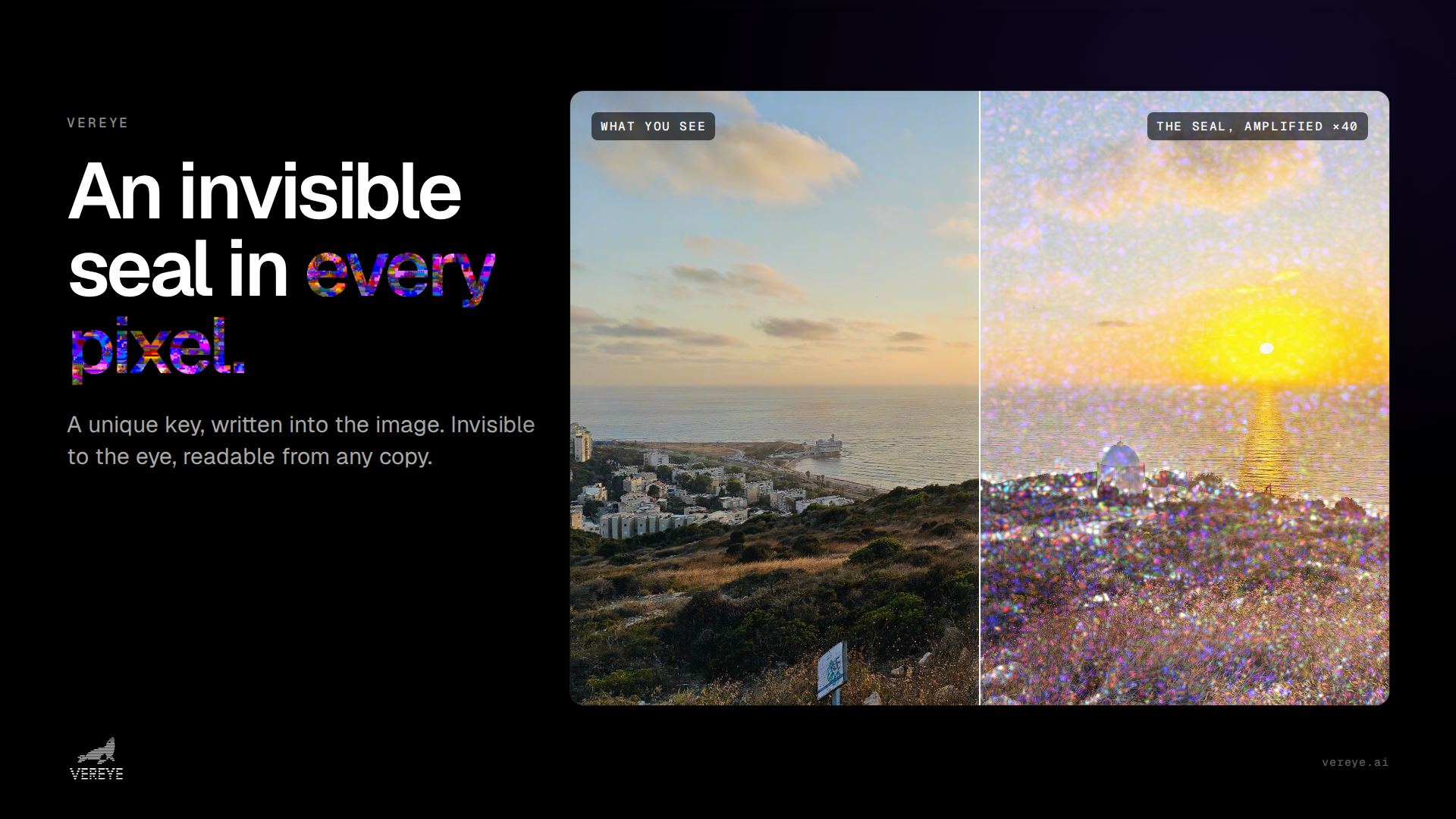
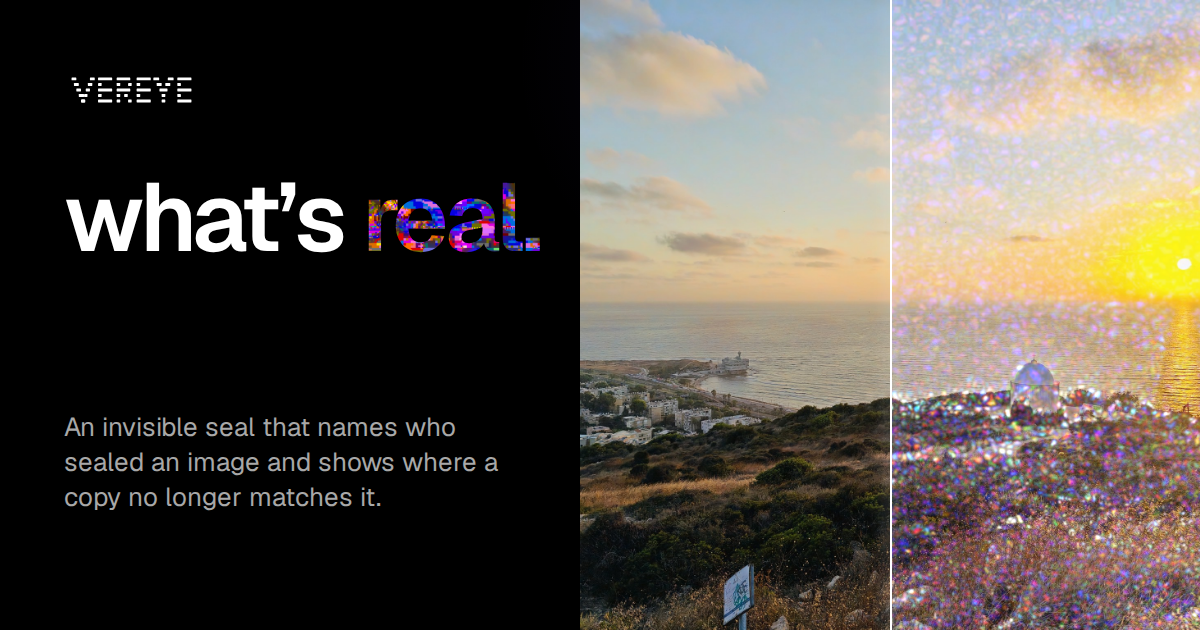
Vereye is an invisible seal that lets anyone check who sealed an image and where a copy no longer matches it, using only the copy.
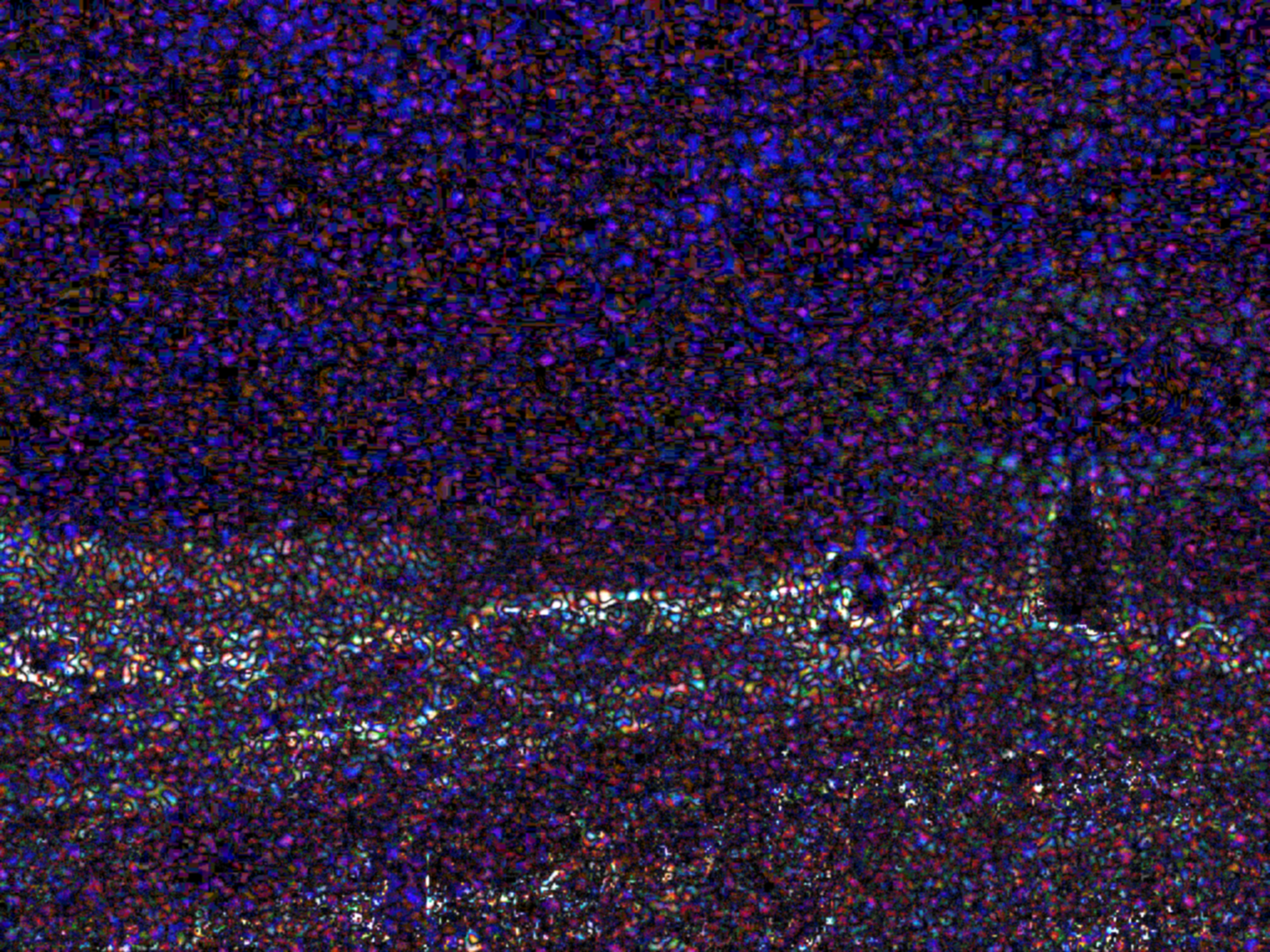
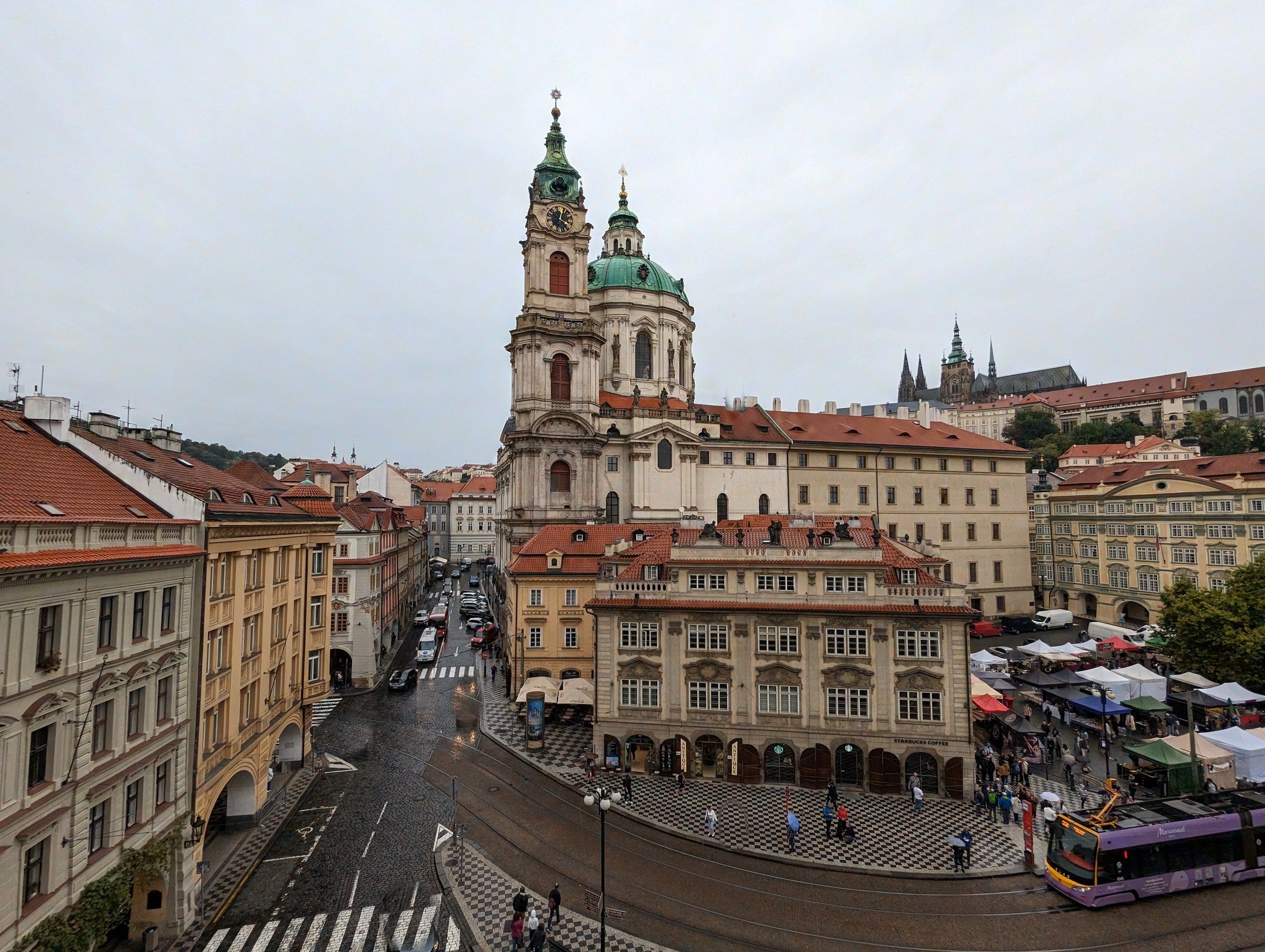
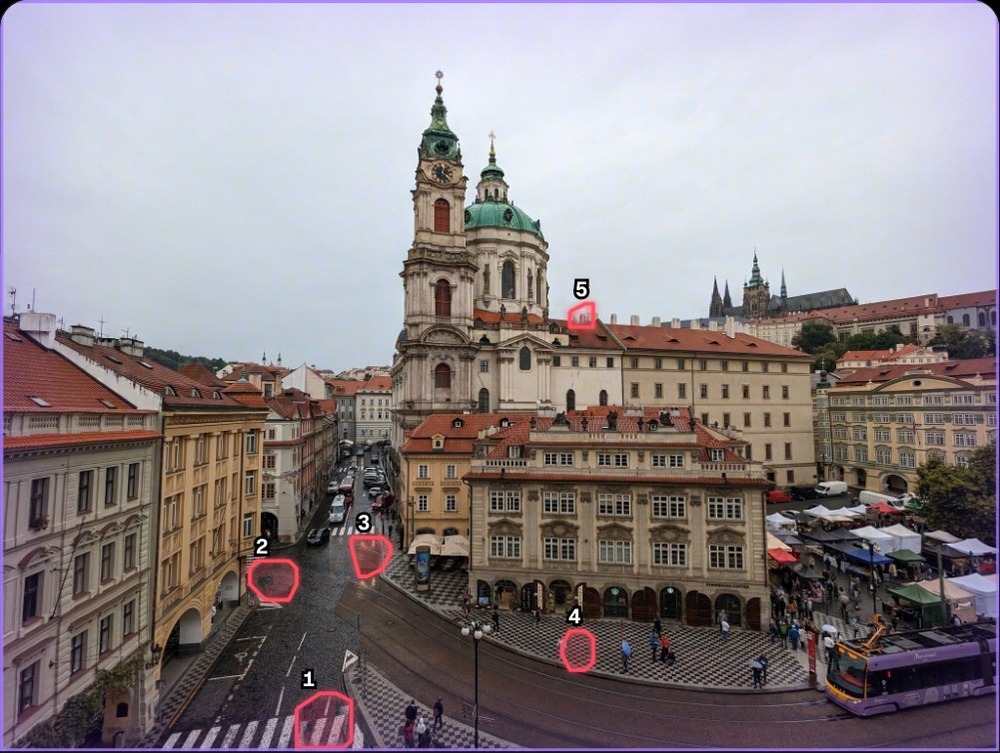
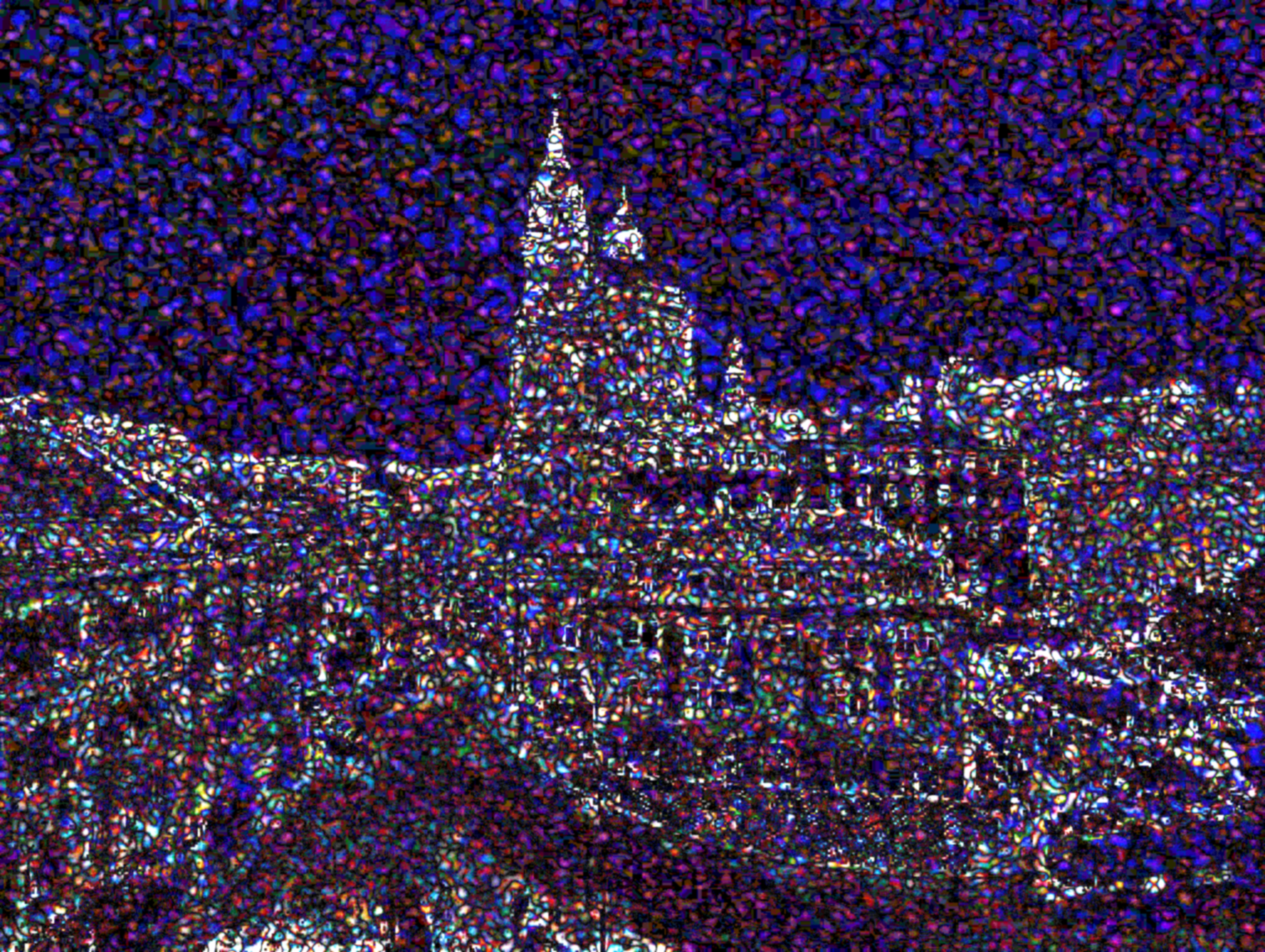
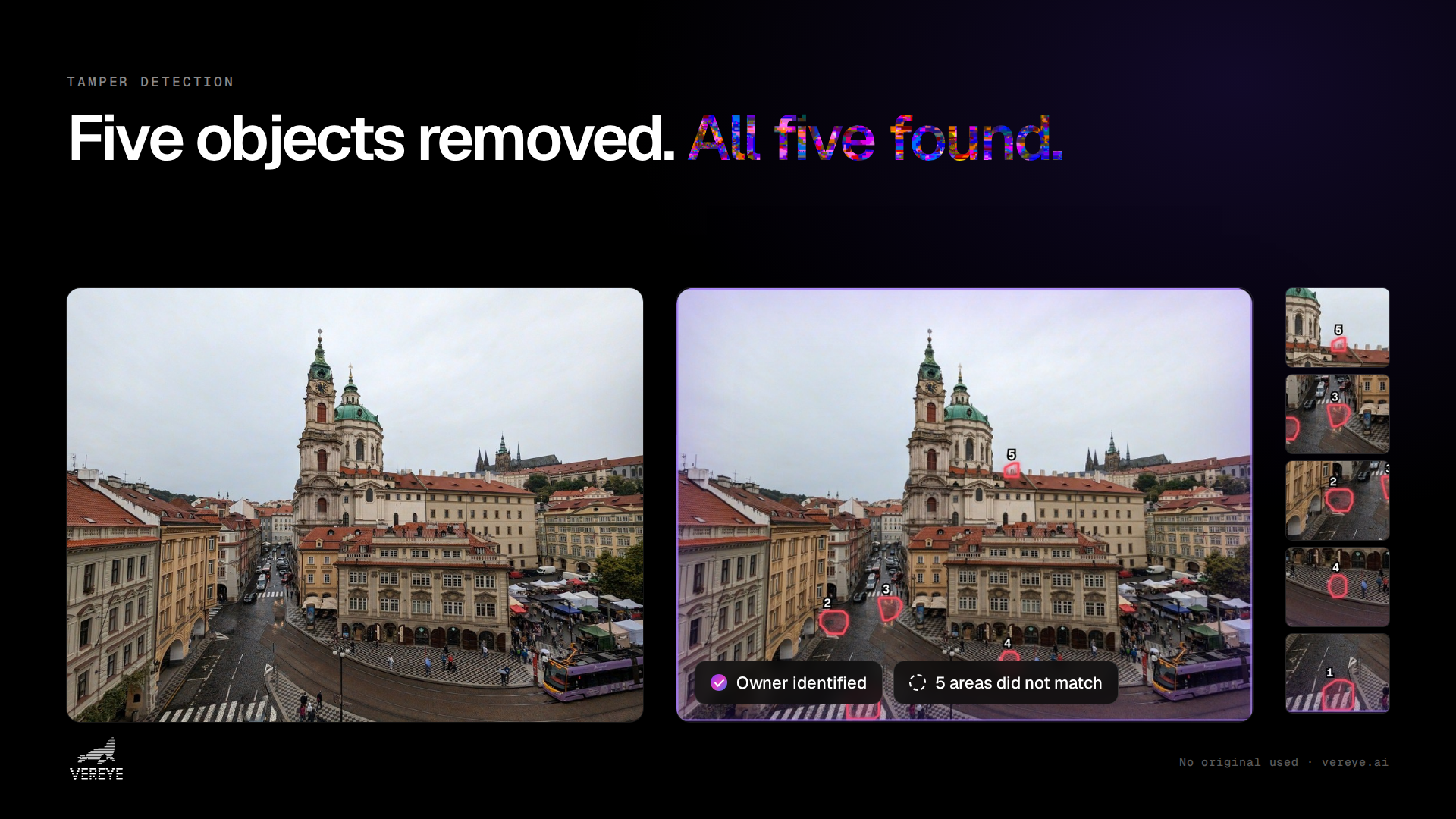
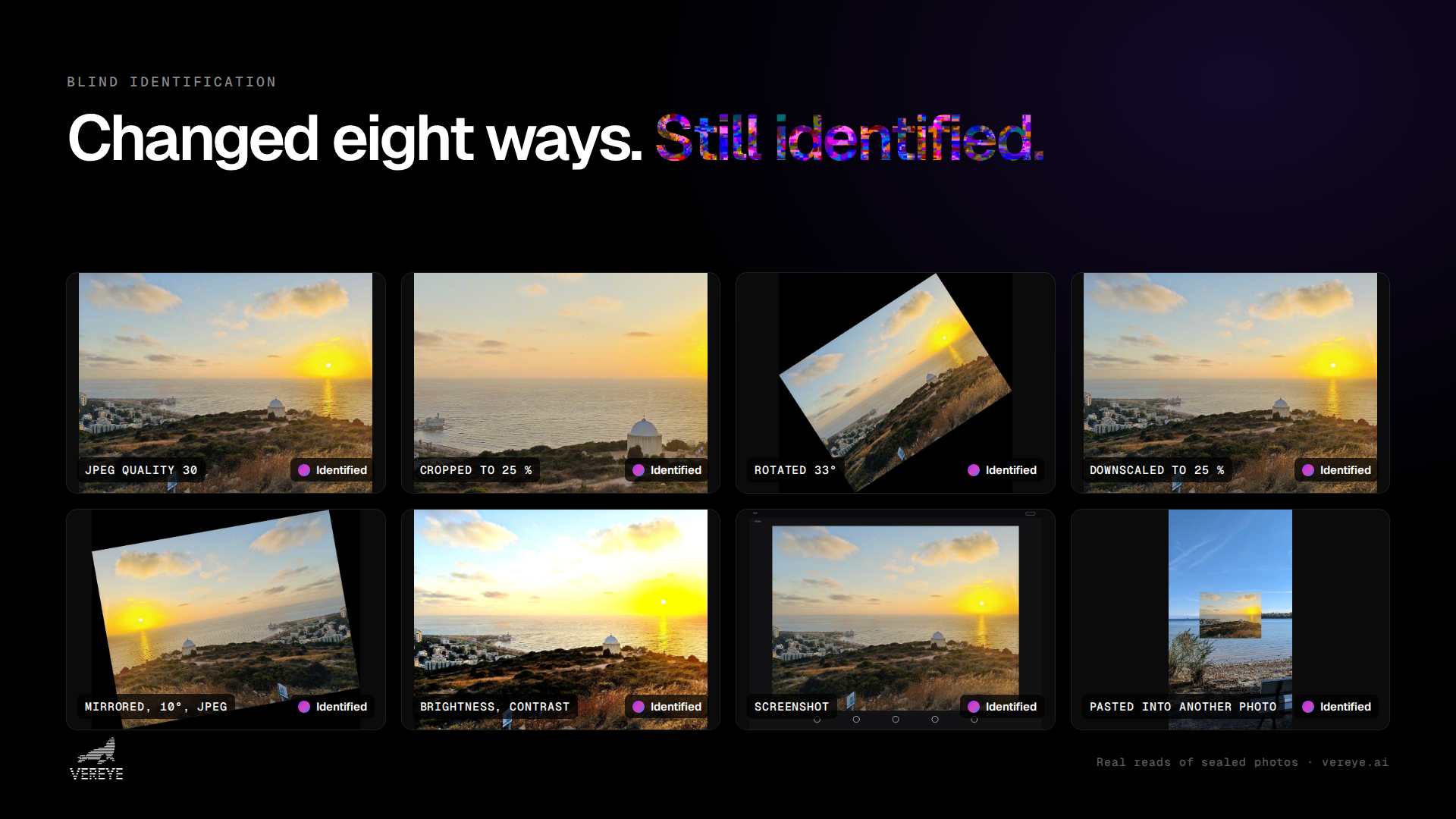
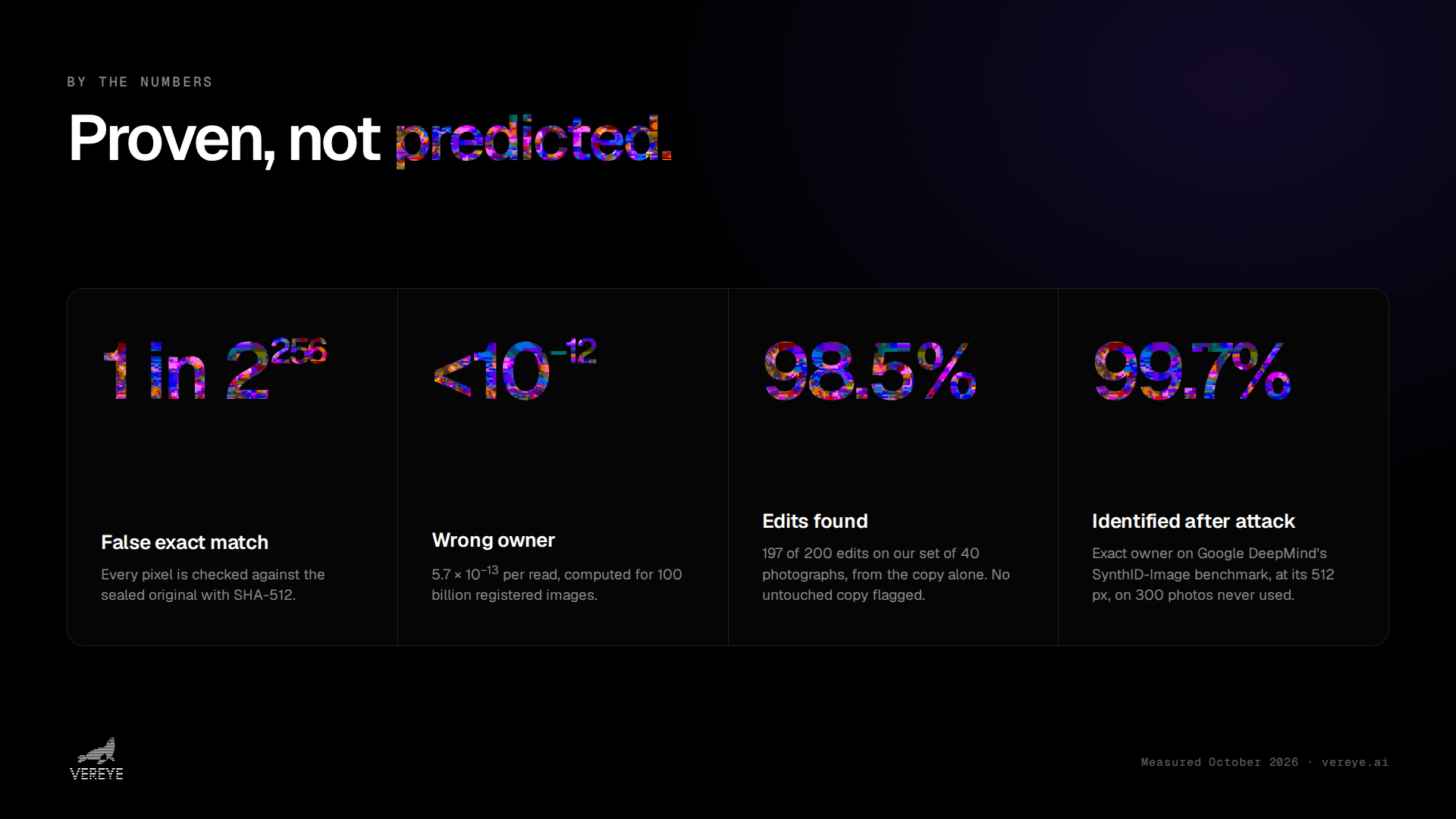
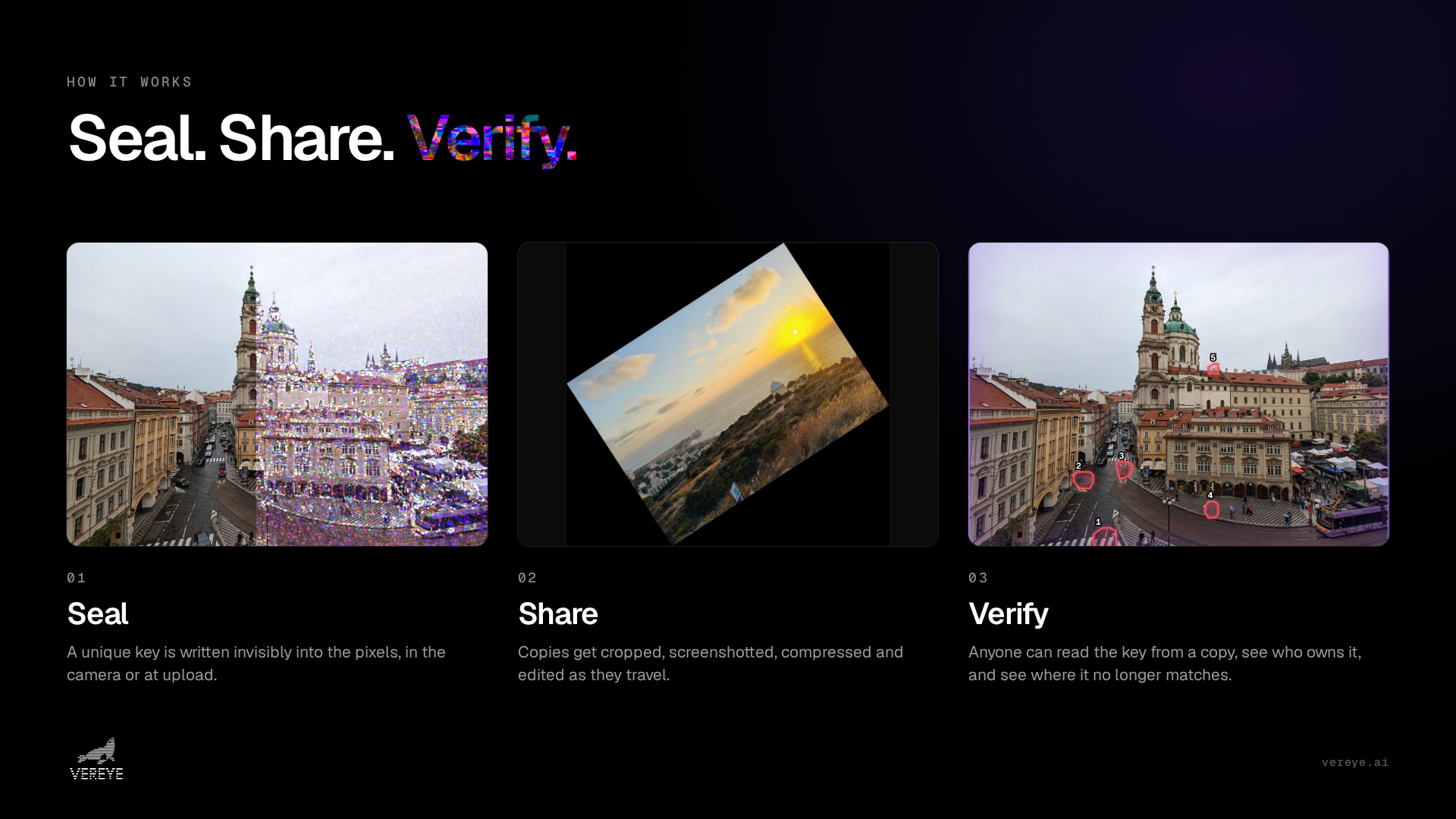
Vereye writes an invisible key into a photo. When a copy is cropped, screenshotted, compressed or edited, Vereye reads the key back without the original, names the registered owner and shows which areas no longer match their registered measurements. On our implementation of the 29 attacks in Google DeepMind’s SynthID-Image paper, at its own size and on 300 photos never used in development, it named the exact owner of 99.7% of attacked copies at typical strength and 95.8% at the most severe, without a single false owner (Google reports 99.96% and 98.84% message recovery for its closed SynthID on its own images).
The problem
AI-generated images often can no longer be told apart from photographs by eye. At the same time, any picture can be copied, edited and reposted in seconds. The result is a growing loss of trust: fabricated news photos spread faster than corrections, fraud uses fake documents and receipts, photographers and artists see their work reposted without credit, and genuine evidence is waved away as “probably AI”.
Why current tools fall short
Metadata standards such as C2PA attach provenance to a file, but a screenshot removes it. AI detectors estimate whether an image looks generated, and can be wrong. The watermarks offered by large AI labs mostly answer one question, whether some mark is present, and they are tuned to accept a share of false alarms. None of the ones we know of can prove, from an arbitrary copy, who owns an image and which parts were changed.
What Vereye does
Vereye seals an image by writing a unique 64-bit key invisibly into its pixels. Anyone can later check a copy. Vereye reads the key from the copy alone, even after cropping, rotation, resizing, compression, screenshots, black and white conversion or perspective changes, and names the registered owner. It then measures the copy against what was registered (the seal, the fine detail and the colour of every area) and marks the areas that no longer match. A copy is called an exact match only when every pixel matches the sealed original. The system uses no machine learning: its exact match and its owner come with computed error bounds rather than a confidence score.
The results
On our implementation of the 29 attacks in Google DeepMind’s SynthID-Image paper, at its own 512 px size and on 300 photos never used while building it, Vereye identified the exact registered owner of 99.7% of attacked copies at random strength and 95.8% at the most severe strength (Google reports 99.96% and 98.84% message recovery for its closed SynthID on its own images; Vereye’s number is the stricter exact-owner rate). At 1024 px, which is not the protocol’s size, on 100 other held-out photos: 99.9% and 98.9%. Across the 46,467 attacked copies of unmarked images in these benchmarks, Vereye named no owner. On Meta’s Watermark Anything benchmark at native 2K resolution, Vereye recovered the exact key from 99.05% of attacked images with no false alarms, against 71.29% for Meta’s WAM and 66.97% for Adobe’s TrustMark on the same photos (the photos Vereye was tuned on). On our tamper set of 40 photographs, it found 98.5% of edits from the copy alone and flagged no untouched copy. The chance of a false exact match is 1 in 2256 (it would take breaking SHA-512), and the chance of naming a wrong owner is computed at 5.7 × 10⁻¹³ per check for a registry of 100 billion images.
What it could change
Vereye is an early proof of concept of an architecture meant to work as a shared standard. If cameras seal photos at capture and AI generators seal what they produce, anyone could tell real from generated after any number of reposts. Newsrooms could prove that a published photo is unaltered. Photographers and artists could prove ownership of a cropped repost. Film studios could give every screener its own key and trace a leak to its source. Courts, insurers and platforms could check evidence and uploads automatically. The same approach extends to video, audio and documents.
Vereye is building a new standard for proving what is real in digital media. Its invisible seal lets anyone verify who sealed an image and where a copy no longer matches it, from the copy alone, with computed bounds on a false exact match and on naming a wrong owner. Vereye was founded by Adam Weisman and Gil Weisman. Patents pending. Contact: Adam@vereye.ai